

In today’s world full of technological advances and constant innovation, brands play a key role not only in choosing products, but also as symbols of trust and quality. Among them, the Olympus brand in the field of optics and imaging technology has emerged as one of the major players who influence the direction of development in the field of photographic and medical equipment. Olympus is not just a camera manufacturer; it is a company with a deep history and ambitions that go far beyond the boundaries of the ordinary consumer market. Let’s take a closer look at what the value of the Olympus brand is in 2025, what are its products, its market position and how it compares to other renowned manufacturers such as Canon, Nikon, Sony, Panasonic, Fujifilm, Leica, Pentax, Sigma or Samsung.
Olympus has roots dating back to 1919, when Takeshi Yamashita’s company was founded in Tokyo under the name Takachiho Seisakusho. They originally focused on the production of microscopes, thus laying the foundations of their expertise in optical technologies. The first step into the world of photography came in 1936 with the launch of the Semi-Olympus I camera in Tokyo’s Shibuya district. This feat defines the brand’s long-term commitment to innovation and quality.
Olympus has developed its portfolio over the decades and recorded several important milestones: from the iconic Olympus Pen model from 1959, which made the brand known even among amateur photographers, through the professional OM-1 series introduced in 1972, to the modern digital OM-D series introduced in 2012. The expansion into medical technology was also key, where Olympus became a leader, especially in the field of endoscopy and surgical instruments.
The brand’s development is also interesting in terms of international expansion. The European branch Olympus Europa from Hamburg contributes to the wide spread of the brand’s products on the continent, including Africa. With around 28,838 employees in 38 countries (as of March 2024) and almost 15,000 patents, Olympus is considered one of the top 100 innovators on the world stage, which is a good representation of its dynamism and ongoing investment in research and development.
Olympus also places emphasis on sustainability. The ambitious goal of achieving carbon neutrality by 2030 confirms its commitment to global trends in responsible manufacturing and ecology. Also significant is the effort to maximize the reparability of devices and dozens of design awards since 1966, which underline the high aesthetic and functional level of the products.
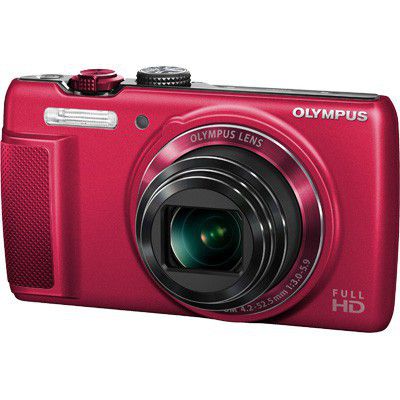
Olympus has historically been one of the pioneers of digital photography technology. Although the brand withdrew from the consumer photography segment in 2020, the transfer of this segment to OM Digital Solutions means that Olympus‘ legacy in this area lives on. Olympus is best known for its compact and hybrid Micro 4/3 format cameras, which offer high-quality images in smaller and lighter bodies than their competitors such as Canon, Nikon or Sony, who dominate the market with full-frame and APS-C sensors.
Photographers value Olympus mainly for:
Unlike brands such as Panasonic or Fujifilm, which also use the Micro 4/3 format, Olympus remains synonymous with reliability and long-term durability, which will be appreciated by both professionals and passionate enthusiasts. Although the Leica, Pentax and Sigma brands offer other specific innovations, Olympus still maintains a strong position in the field of compact and medium bodies.
It is also important for users to follow the trend of increasing availability of full-frame cameras, which tend to be cheaper and more popular, which represents a challenge for the Olympus Micro 4/3 system. Nevertheless, it remains a valued partner in the sports and travel photography segment, where size and weight play a role.
Olympus is not just synonymous with photographic equipment. Its activities extend far beyond cameras and accessories. The multimedia division accounts for around 30% of the group’s turnover, which is a testament to the importance of this segment, but the brand also excels in medical products and industrial cameras.
The main product groups include:
In the healthcare sector, Olympus holds about 70% of the global market for endoscopes for the gastrointestinal area. This dominance is supported by a high level of innovation, for example, patent US11607114, which in March 2023 introduces a new endoscope system with ultrasound technology. All this is evidence of continuous growth and the search for new paths in medical technology.
Olympus also relies on constantly updated products that take into account the needs of professionals and end users. This is also evident in the design, which has won 294 different awards since 1966, which is a unique performance among the competition.
The value of the Olympus brand is strongly embedded in its ability to innovate and bring advanced technologies to the market. With over 15,000 patents, it is one of the world’s leading innovators, as confirmed by its position in the top 100 global innovators. This position is an important indicator not only of financial stability, but also of a long-term growth strategy and adaptation to rapid market changes.
Olympus focuses on several technology areas:
Strategic patents such as the aforementioned US11607114 from March 2023 show how Olympus is pushing the boundaries of possibilities in the field of endoscopic technologies and surgical devices. Demanding quality standards are complemented by an emphasis on easy repairability of products, which increases their lifespan and customer satisfaction. This represents an important element of brand value in the eyes of consumers and partners.
The value of the Olympus brand cannot be understood only as historical capital, but above all in light of its current position in global markets. Despite significant restructuring, such as the divestment of the camera division in 2020, the company was able to maintain strong growth in the medical devices segment.
According to available data from the first quarter of 2024, Olympus employs 28,838 people in 38 countries, which indicates an extensive global presence. At the same time, a portfolio of 15,000 patents creates a strong protective barrier against competition. Revenues are heavily dependent on medical devices, which account for more than 60% of sales.
From an economic perspective, the brand value is also influenced by its reputation as a technology leader and innovator. For investors, this means confidence in long-term stability and the potential for expansion into new markets. With its growing emphasis on environmental responsibility, Olympus is not only increasing its environmental value but also its attractiveness to environmentally conscious consumers.
Olympus thus competes well with well-known brands such as Panasonic and Sharp, which are also aiming for innovation in technology segments. For more context, we recommend taking a look at Sharp brand value or how the Panasonic brand stands.
While Samsung, Canon or Sony focus more on consumer electronics, Olympus is one of the world’s leading manufacturers of medical technology, where it holds a dominant position, especially in the field of endoscopy. Approximately 70% of the market share of gastrointestinal endoscopes is evidence of the unshakable trust of the professional community and medical institutions.
This area is characterized by the complexity of technologies, where Olympus combines innovations in 4K, 3D and NBI imaging systems with surgical robotic instruments. For 2025, a strong emphasis is also placed on environmental aspects – the sustainability of the production and operation of the equipment is a priority.
However, this strategy is not only a business necessity, but also a response to the growing demands of users and regulators. Olympus is thus able to assert itself in the highly competitive medical technology market and contribute to better patient health care worldwide.
Although Olympus has transferred its consumer photography activities to OM Digital Solutions, the Olympus name remains synonymous with quality and innovation in the minds of users. Reviews across platforms are overwhelmingly positive, with ratings mostly exceeding 4.5/5, indicating user satisfaction.
Consumers particularly appreciate:
On the other hand, some challenges have also been identified. With the transition to Micro 4/3 format, in some cases users lack a full-frame alternative that is available from competitors. Olympus’s departure from the mainstream consumer camera market also sometimes raises uncertainty among long-time fans of the brand. Nevertheless, the attitude of users towards Olympus is mostly stable and positive.
For those interested in a deeper look at the brand values, we also recommend comparing it with other technology names such as how is the Metabo brand worth or what is the value of the Remington brand.
The Olympus brand reflects more than a century of tradition and innovation that has not only defined the development of quality optical instruments, but has also significantly contributed to progress in medical diagnostics and treatment. In the field of photography, Olympus is characterized by its ability to produce compact and at the same time professional devices that are comparable in many ways to big names such as Canon or Nikon.
In the medical sector, Olympus has become an indispensable partner for medical facilities. Endoscopic devices and surgical instruments developed by this brand are used worldwide and their quality has been verified by doctors and patients. In addition, the element of sustainability and environmental care brings brand value to the area of corporate responsibility.
Olympus is thus an example of how a brand with history can remain relevant, competitive and at the same time responsible, an aspect increasingly valued by customers and investors.

